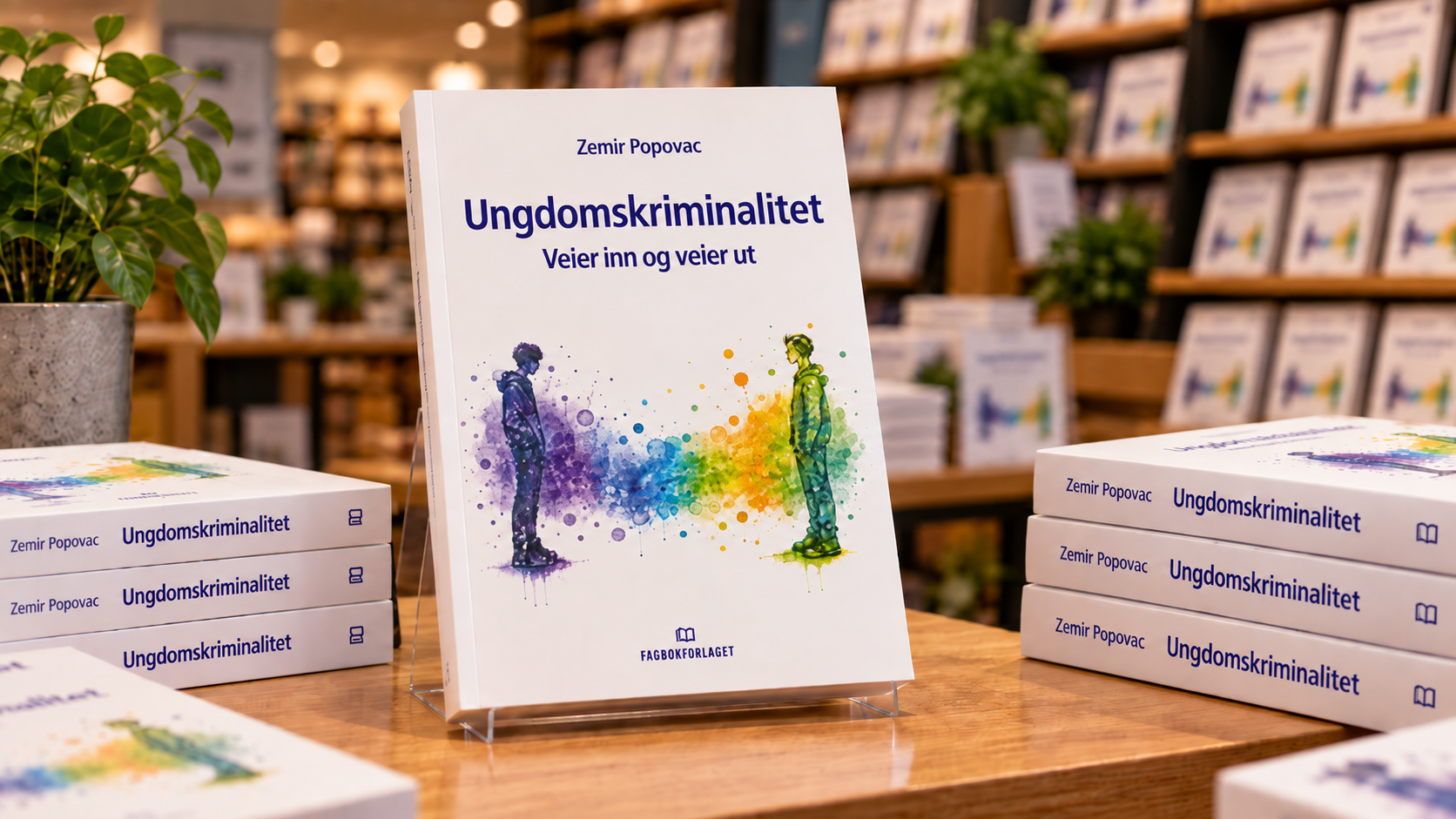
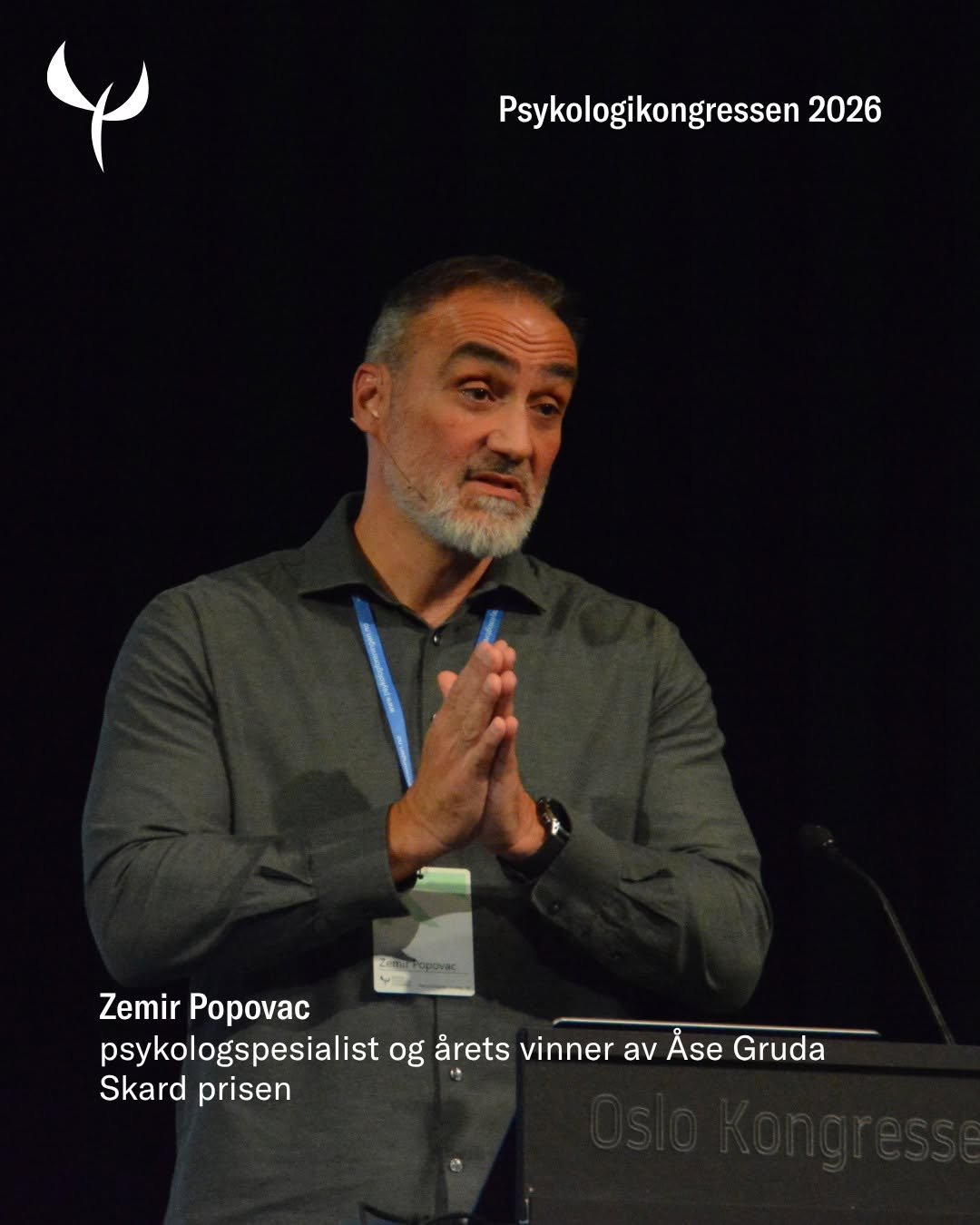
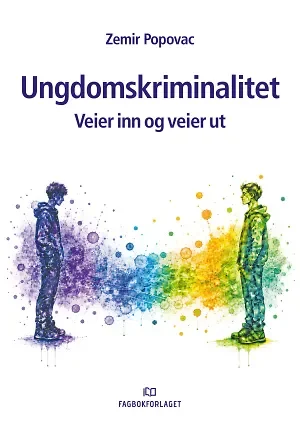
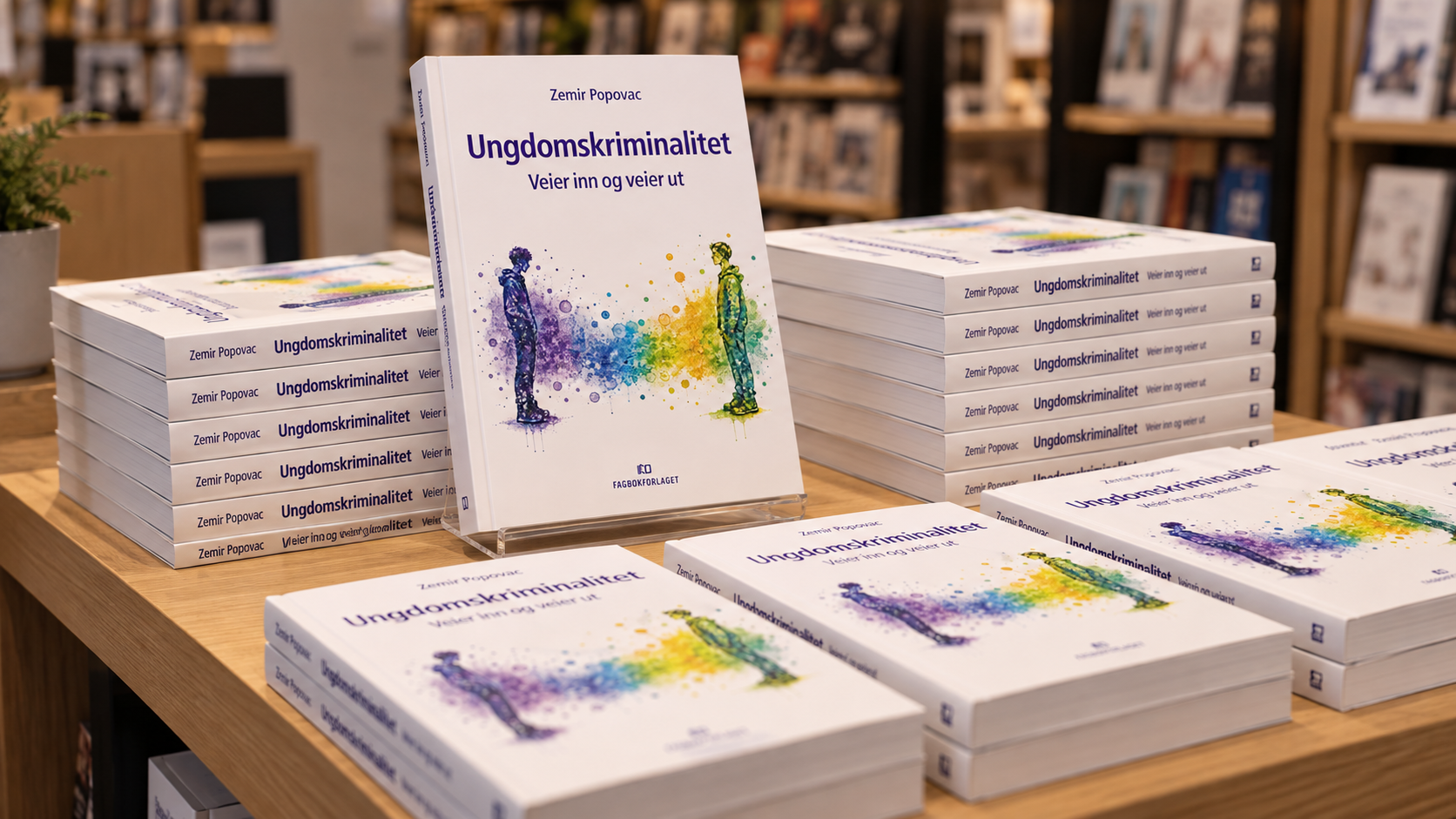
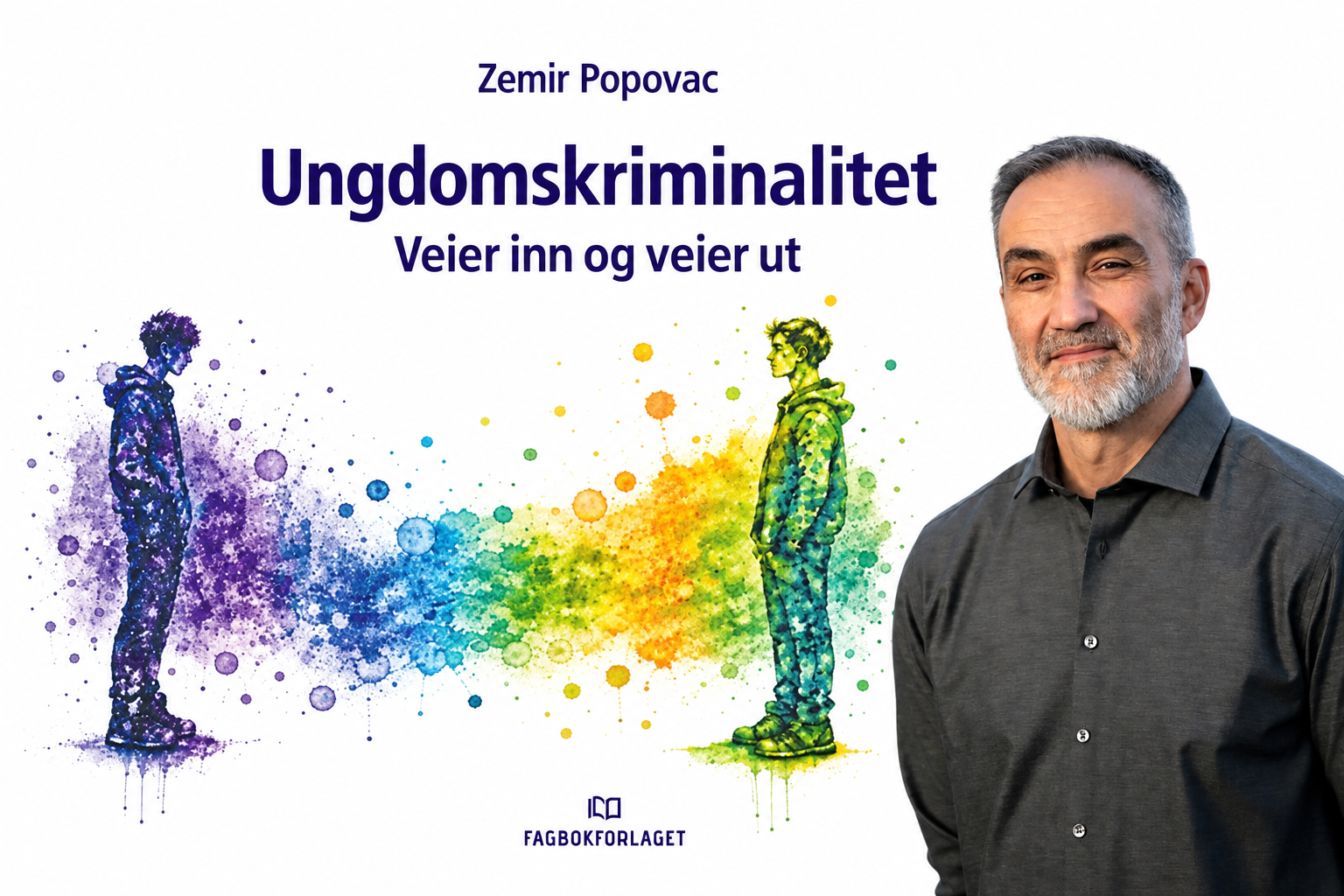
A Conversation with Zemir Popovac on his new book Youth Crime – Weighing in and Weighing
ORDER NOW
ORDER NOW
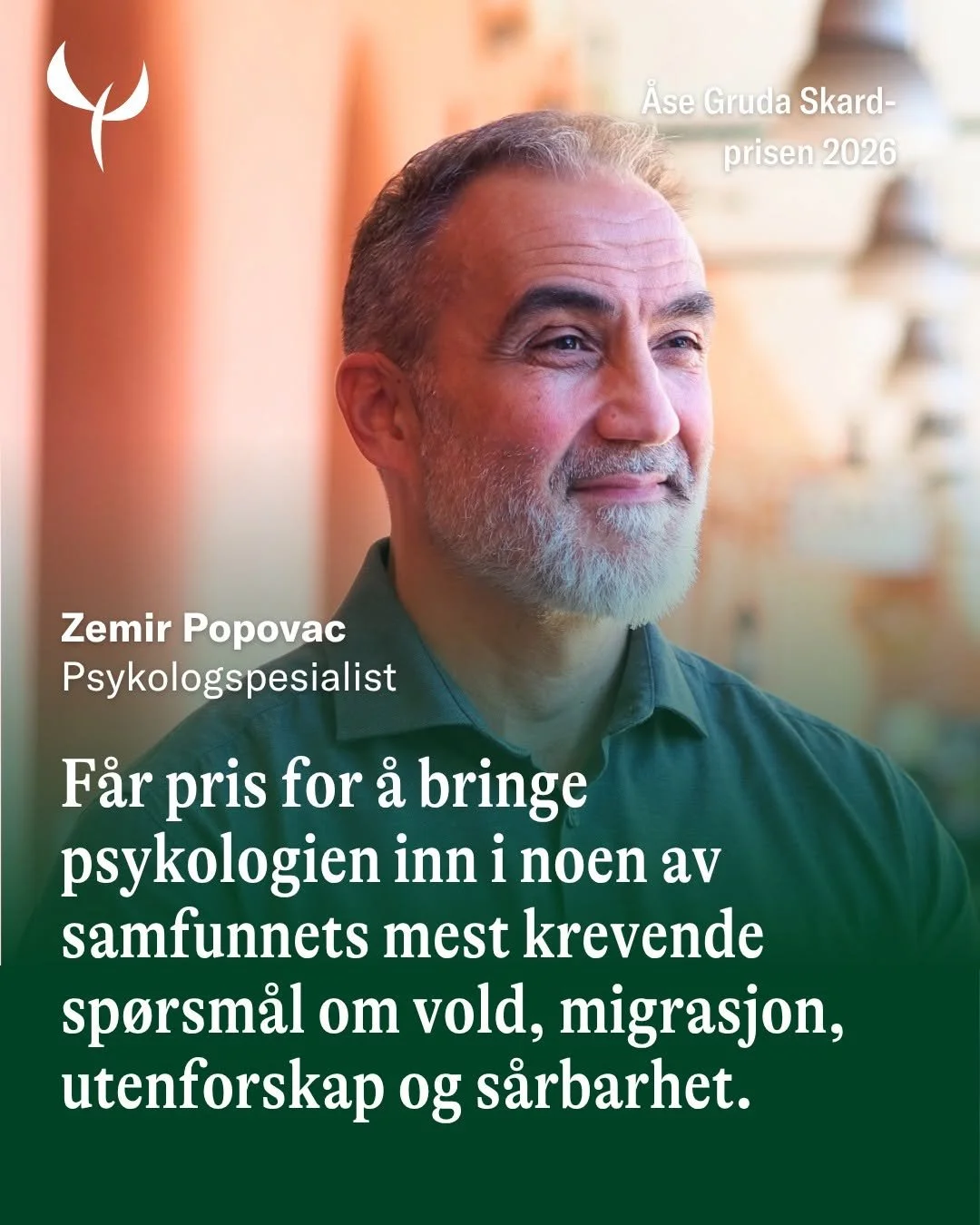
1. What compelled you to write this book?
I have worked with children and young people for more than twenty-five years, particularly those involved in serious violence and repeated criminal behaviour. During that time, I have followed several hundred young people, and one lesson has become very clear to me: criminal behaviour never appears out of nowhere.
Public discussions about youth crime are often divided. Some focus almost entirely on the individual and personal responsibility, while others focus on poverty, exclusion and social inequality. Some call for care and support; others call for punishment and control. I wanted to write a book that brings these perspectives together.
The book integrates developmental psychology, sociology and criminology. It explores the vulnerabilities within the young person, the environments surrounding them, and the social conditions shaping their opportunities.
The central idea is that all behaviour has an origin, a meaning and a function—including criminal behaviour. Understanding this does not mean excusing harmful actions. It gives us a better foundation for preventing crime, protecting society and helping young people find a way out.
2. How does the concept of social responsibility and community service among young people fit within your understanding of healthy youth development and crime prevention?
Healthy development is not only about receiving care. Young people also need opportunities to contribute, take responsibility and experience that they matter to other people.
Community service can support this development when it is meaningful, appropriately structured and connected to trusted adults. It can help young people experience themselves as capable contributors rather than simply as problems that society must manage.
I use the concept of mattering in the book. It means feeling that you have value to others and that you can contribute and make a difference. Criminal groups may offer young people a distorted version of this: a role, a purpose, status and a sense of importance. Communities must provide stronger and healthier alternatives.
3. How significant are mentorship and a sense of belonging in determining whether an at-risk young person moves towards or away from criminal behavior?
They can be decisive. Young people do not develop in isolation; they develop through relationships and through the groups to which they belong.
A young person who feels invisible, rejected or unsuccessful may become highly vulnerable to environments offering immediate belonging, recognition, protection and status. Criminal groups understand these needs very well. They do not necessarily begin by asking a child to commit a serious offence. They may begin by offering friendship, attention, food, money or a sense of importance.
A good mentor can provide an alternative relationship—one built on trust, stability and genuine interest. Belonging means being noticed, valued and missed when you are absent.
Mentorship works best when it is consistent and supported by a wider network. One trusted adult can make a profound difference, but that adult should ideally be connected to a broader community of family members, teachers, coaches and professionals. Young people need both a relationship they can trust and a community in which they can build a future.

4. From a developmental perspective, why can ordinary experiences in sport matter so much?
Development is built through ordinary, repeated experiences. Sport can provide routines, clear expectations, physical activity, cooperation and a sense of progress. Sport is not only about learning the rules of the game and specific skills; it is also about learning to manage difficult emotions and conflicts. It allows young people to experience frustration, failure, conflict, recovery and achievement within a safe structure.
Sport also creates identity. A young person can begin to think, “I am a basketball player,” “I am part of this team,” or “People depend on me.” That identity can compete with identities offered by criminal groups.
Sport is not automatically protective, however. It must be accessible, inclusive and led by adults who understand young people. An environment centred only on performance can reproduce rejection and exclusion. The protective power of sport lies not only in the activity itself, but in the relationships, belonging and opportunities for development surrounding it.
5. Are loneliness, smartphones, inactivity, mental health difficulties and weakening face-to-face communities separate problems, or are they connected to youth crime?
They are distinct issues, but they can be connected through shared developmental mechanisms. None of them automatically causes criminal behaviour, and most lonely or struggling young people never commit crime.
However, loneliness, poor mental health and exclusion can increase a young person’s need for belonging, recognition and relief from emotional distress. If healthy communities become weaker, harmful online or offline communities may fill the space.
Smartphones are not simply the problem. They can connect young people and provide access to support. But they can also intensify social comparison, threats, humiliation and exposure to criminal networks. In Scandinavia in particular, we have seen a worrying increase in recent years in the recruitment of young boys to commit serious criminal offences. Through grooming and offers of recognition and belonging, criminal gangs exploit young people’s emotional need to matter.
Youth crime is rarely the result of one factor. Risk develops when several vulnerabilities accumulate while protective relationships and opportunities are absent. We should therefore avoid both moral panic and complacency. The important question is not merely how much time young people spend online, but what they are seeking there—and what may be missing elsewhere in their lives.

6. What warning signs should parents, teachers and coaches recognize before a young person reaches a crisis point?
Adults should pay attention to significant changes rather than searching for one definitive sign. Warning signs may include sudden school absence, withdrawal from previous friends or activities, unexplained money or possessions, increasing secrecy, changes in sleep, substance use, carrying weapons, intense fear, or association with significantly older young people.
Repeated aggression, escalating conflicts and a sudden preoccupation with status, humiliation or revenge can also be important. Some young people become visibly disruptive; others become unusually quiet and difficult to reach.
Research on prevention shows that active parental involvement is one of the strongest protective factors. Parental involvement is often described in terms such as parental control, supervision or monitoring. But these terms can easily create the impression that the parents’ role is primarily one of control and surveillance. What protects a young person is not surveillance alone, but parents who are genuinely involved in their life, know where they are and who they spend time with, and remain emotionally available. The key is to respond with curiosity rather than immediate accusation: “I have noticed that something has changed. I am concerned about you. Can you help me understand what is happening?”
Adults must also communicate with one another. A parent may see changes at home, a teacher may notice absence, and a coach may see that the young person has become anxious or stopped attending. Separately, these signs may seem minor. Together, they may reveal that the young person needs help.
7. At what point does society have an opportunity to intervene?
Society has opportunities to intervene throughout the entire developmental pathway—but the earlier we act, the more options we have.
Intervention begins long before a crime occurs: through safe childhoods, support for families, inclusive schools, accessible leisure activities and communities in which children experience belonging and hope. It also means responding early to violence at home, learning difficulties, bullying, school exclusion, substance use and mental health needs.
But early intervention should never be misunderstood to mean that it is too late once a young person has committed a serious offence. Adolescence is a period of profound development. The brain, identity and capacity for self-control are still changing. Even young people deeply involved in criminal environments can change direction.
We therefore need interventions before, during and after criminal involvement. Prevention and accountability are not opposing ideas. Effective intervention must protect society, interrupt harmful behaviour and address the needs and circumstances that helped produce it.
8. Can a single mentor or role model genuinely alter a child’s life course?
Yes, a single person can become a turning point in a young person’s life. Many young people can identify one adult who saw something in them before they could see it themselves.
The most influential mentor is not necessarily the most charismatic person. It is often the person who remains consistent, keeps promises, sets boundaries and does not disappear when the young person becomes difficult to help.
However, we should not romanticise the role of the individual mentor. Love, encouragement and commitment are powerful, but a mentor cannot compensate alone for unsafe housing, poverty, family violence, school exclusion or serious mental health difficulties. The strongest approach combines a dependable relationship with practical opportunities and coordinated support.
9. What should accountability look like when the offender is still young enough to change profoundly?
Accountability should be clear, proportionate and developmentally informed. Young people must understand that their actions have consequences and that victims’ suffering is real. Taking youth seriously also means expecting them to take responsibility.
But accountability should not define the young person by the worst thing they have done. There is a crucial difference between saying, “You committed a violent act,” and saying, “You are a violent person.” The act must be confronted, while the possibility of change must be protected.
Effective accountability should help the young person understand the harm, make meaningful amends where possible and develop the skills needed to act differently. It must be combined with education, family support, mental health care, substance-use treatment and access to prosocial communities when these are needed.
My central advice would be: combine firm boundaries with continued human connection. Control without care can produce alienation, while care without boundaries can fail both the young person and society. Warmth without boundaries is naivety. Young people need both.
10. Where does the present justice system succeed, and where does it need to improve?
The justice system succeeds when it recognises that young people differ developmentally from adults and when responses are individualised, proportionate and oriented towards rehabilitation. Alternatives that combine accountability with education, family involvement and restorative processes are particularly valuable.
The system struggles when agencies work in parallel rather than together, when help arrives too late, or when responsibility is passed between schools, health services, child welfare and the police.
We also need greater continuity. A short intervention may interrupt an immediate crisis, but lasting change requires stable relationships, safe living conditions and realistic pathways into education, employment and community life.
11. Can you speak about the impact of female role models, particularly in sport?
Female role models can have a powerful impact on both girls and boys. For girls, representation can expand their understanding of what is possible. Seeing women as athletes, coaches and community leaders challenges narrow expectations and demonstrates strength, discipline, confidence and social responsibility.
This may be particularly important for girls who must negotiate conflicting expectations at home, among peers and in the wider society. A trusted female mentor may understand experiences that girls do not feel able to discuss with male adults, including body image, discrimination, relationships, safety and cultural expectations.
Female role models also show boys that authority, competence and strength are not exclusively male qualities. That matters for the development of respectful relationships and healthier ideas about gender.
12. What is the single message about preventing youth crime that you would most want policymakers, educators, law-enforcement leaders, parents and community organisations to hear?
Children and young people develop in and through relationships—and criminal behaviour also develops in and through relationships. Relationships must therefore have a central place in prevention and rehabilitation.
We must avoid individualising responsibility for a person’s behaviour and viewing crime solely as an expression of that individual’s antisociality. It can be tempting to think of crime as a problem caused by criminal individuals or groups, because this confines the problem—placing it within the individual—and creates distance: “This is about them, not us.” The response will then be to gain control over these individuals by restricting them, punishing them or deporting them. This individualistic view of youth crime disregards the conditions surrounding young people that contribute to criminal behaviour. We risk placing all the pressure on “changing the young person” without changing “the living conditions that contribute to the problem.”
On the other hand, if we understand youth crime only as a result of social inequality, poverty, difficult living conditions and discrimination, we may see young people who commit crime solely as victims of injustice and focus exclusively on changing these contextual conditions. But not all children who grow up in poverty become involved in crime. We therefore cannot understand youth crime solely in terms of individual responsibility, nor solely as the result of social injustice.
Youth crime emerges through an interaction between individual vulnerabilities, relationships, schools, neighbourhoods, social conditions and criminal opportunities. Prevention must therefore be equally comprehensive: it must address the young person’s vulnerabilities, pressures within the family and social conditions that increase risk. This interaction is precisely what I explore in depth in the book.
We need adults and institutions to share information appropriately, coordinate their efforts and remain present over time. Young people need families that receive support, schools that keep them connected, police that provide safety and clear boundaries, health services that respond to their needs, and communities that offer meaningful belonging.
We must also move beyond the false choice between understanding and accountability. To understand why a young person commits crime is not to accept the offence. It is how we identify what must change.
Prevention is most effective when young people encounter the same message across the community: “We will not accept harmful behaviour, but we will not give up on you.” And there must be real opportunities for a future waiting for them.
This has already become a long answer, but I would like to add one important point. The most important work we do with children and young people who challenge us through their behaviour is the work we do with our own emotions. How we think and feel about a child helps shape how that child will think and feel about themselves. The image children find of themselves in our eyes becomes the image in which they see themselves reflected.
When children and young people commit crime and use violence, they can evoke powerful feelings of anger, fear, concern and helplessness in us. Sometimes, the measures we propose may reflect our own emotional need to regain control, “put the child in their place” or release our feelings more than they serve the child’s best interests. At worst, these emotions can cause us to lose our empathic interest in the child: we no longer see the child, but “the monster”—someone we regard as evil, manipulative or beyond help.
It is one thing to be angry with a child or young person—which may be entirely appropriate when they commit dangerous and provocative acts—but it is something else to lose our empathic interest. The most important work is therefore the work that takes place within us: preserving our empathy. This is why I avoid referring to “violent children”. Instead, I speak of “children who use violence”. Violence is not a characteristic of the child. It is an act.